Compressed Air Blowdowns - A Good Idea?
Published by Filter Element Store on Dec 30, 2025
Compressed Air Blowdowns: Safe Use for Dust Cleaning (and When to Avoid Them)
Compressed air blowdowns can create more problems than they solve if they are not used carefully.
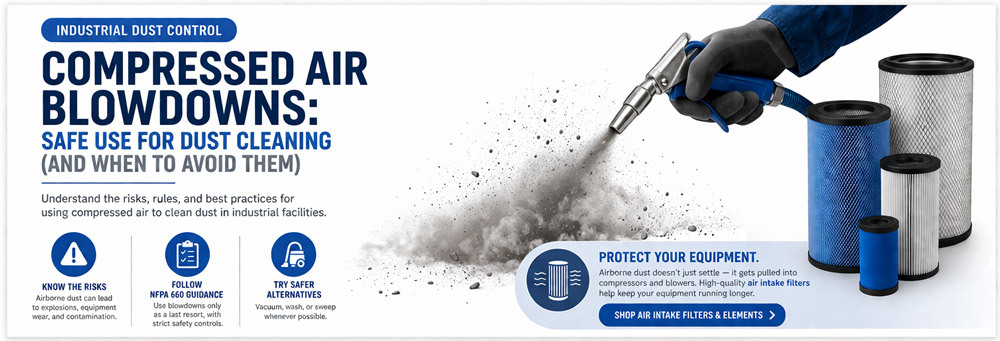
Cleaning up dust in industrial spaces, especially combustible dust, can be a real headache. Sweeping, vacuuming, and washdowns are the usual go-to methods, but one approach that always sparks debate is the compressed air blowdown.
A compressed air blowdown is exactly what it sounds like. You start at the highest points in a facility and use compressed air to blow dust down onto floors or surfaces where it can be collected later. It is not really removing dust. It is relocating it. That is why some people jokingly call it the "dust redistribution service."
What Is a Compressed Air Blowdown?
In simple terms, a compressed air blowdown uses compressed air to knock dust off elevated surfaces, beams, equipment, and other hard-to-reach areas so it falls to the ground for cleanup. While that may sound efficient, it also creates an obvious problem: dust that was settled is now airborne.
Compressed air has its place, but it is not a universal cleaning solution. In many cases, it should be treated as a last resort rather than a routine housekeeping method.
Why Blowdowns Are Controversial
The biggest issue with a blowdown is simple: it turns settled dust into a floating dust cloud. Once that dust is in the air, it can stay suspended longer than expected, travel into other areas, and eventually settle somewhere else. So instead of solving the problem, you may just be performing the industrial version of the dust shuffle.
That matters even more in facilities dealing with combustible dust. Blasting dust into the air is not just messy. It can be dangerous.
When Can Compressed Air Be Used?
Standards such as NFPA 660 generally make it clear that compressed air should not be the first cleaning method you reach for. Safer cleaning methods should be tried first, and compressed air should only be used with proper precautions in place.
Before using a blowdown, facilities should confirm that:
- Safer cleaning methods such as vacuuming, sweeping, or washdowns have already been considered first
- Dust accumulations are limited and not excessively thick
- Pressure-relief nozzles are used so air pressure stays below 30 psi
- Electrical equipment in the area is suitable for hazardous locations, where required
- Ignition and heat sources are shut down or removed
- Fire protection systems remain active and ready
- Any remaining dust is actually cleaned up after the blowdown
- Additional precautions are followed for metal dust where applicable
The overall message is pretty clear: do not use compressed air until safer options have been evaluated, and even then, use it with caution.
How Much Dust Is Too Much?
It does not take much dust to create a hazard. In some cases, a dust layer thinner than a credit card can still present a combustible dust concern under the right conditions. That is one reason housekeeping standards take dust accumulation so seriously.
The Real Risk: Airborne Dust and Explosions
When you blow dust into the air, you may be checking several boxes in the explosion pentagon:
- Fuel, in the form of combustible dust
- Oxygen in the surrounding air
- Dispersion, because the dust is now airborne
- Confinement, if the dust cloud forms in or moves into an enclosed area
- An ignition source such as heat, sparks, static, or electrical equipment
That combination can turn routine cleaning into a serious safety risk. The goal of housekeeping should be to remove dust, not create a cloud and hope it settles somewhere harmless.
Blowdown vs Other Cleaning Methods
Compressed Air Blowdown
Removes Dust: No, it relocates dust
Safety Level: Low if uncontrolled
Best Use: Last resort for hard-to-reach areas
Industrial Vacuum
Removes Dust: Yes
Safety Level: High
Best Use: Routine dust removal
Washdown
Removes Dust: Yes
Safety Level: High
Best Use: Washable environments
Sweeping
Removes Dust: Partially
Safety Level: Moderate
Best Use: Non-hazardous dust areas
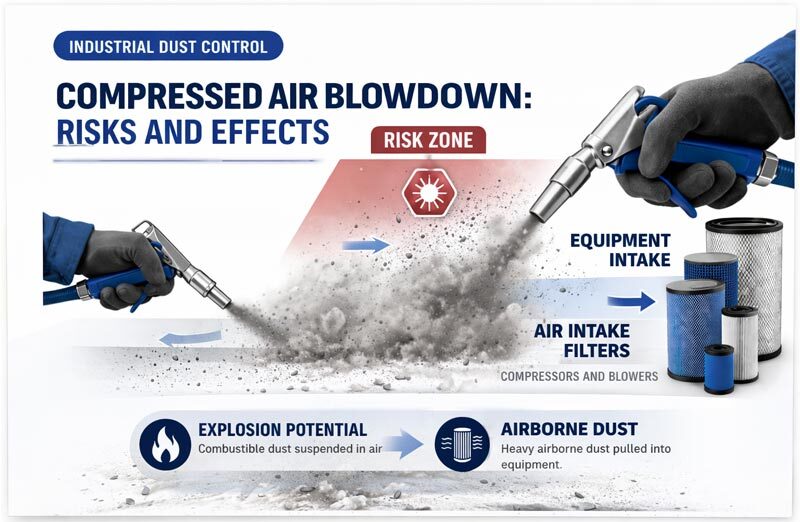
Detailed Compressed Air Blowdown Illustration
The visual below helps show why blowdowns can create a larger airborne dust hazard instead of truly removing dust.
Where Air Intake Filters Fit In
One thing that often gets overlooked during blowdowns is what happens after the dust gets airborne. It does not just disappear. It gets pulled into equipment.
This is where air intake filters play an important role. Compressors, blowers, and other air-handling equipment pull in whatever is floating in the surrounding air. If a facility regularly uses blowdowns, airborne dust levels can spike fast. Poor intake filtration can lead to premature wear, fouling, and unnecessary downtime.
In other words, if your facility creates more airborne dust during cleaning, protecting equipment with the right intake filter elements becomes even more important.
Bottom Line
Compressed air blowdowns can be useful in limited situations, but they should never be the default cleaning method. If compressed air has to be used, it should be handled thoughtfully, with the area controlled, ignition sources addressed, and final cleanup completed properly.
Otherwise, you are not really removing the dust. You are just moving it somewhere else, and sometimes creating a bigger problem in the process.
Protect Your Equipment from Airborne Dust
Facilities that deal with heavy airborne dust during cleaning or operation should also take a close look at intake filtration. Better air intake filters and replacement elements can help protect compressors, blowers, and related equipment from unnecessary contamination and wear.